Take care to avoid excessive force or rapid administration to prevent discomfort

Nguyen 13 , Volker Puetz 1 1 Department of Neurology, Dresden Neurovascular Center, University Hospital Carl Gustav Carus Dresden, Dresden, Germany, 2 Institute of Neuroradiology, Dresden Neurovascular Center, University Hospital Carl Gustav Carus Dresden, Dresden, Germany, 3 Radiology and Radiation Oncology, Boston Medical Center, Boston University Chobanian & Avedisian School of Medicine, Boston, United States, 4 Department of Neurology, University of Toledo, Toledo, United States, 5 Department of Neurology, Helsinki University Hospital, University of Helsinki, Helsinki, Finland, 6 Departments of Neurology and Neurosurgery, University of Pittsburgh Medical Center, Pittsburgh, United States, 7 Department of Neurology, Klinikum Ludwigshafen, Ludwigshafen, Germany, 8 Department of Neurology, UZ Leuven, Laboratory for Neurobiology, KU Leuven, Leuven, Belgium, 9 Department of Neurology, Hospital de Egas Moniz, Centro Hospitalar Lisboa Ocidental, Lisbon, Portugal, 10 Department of Neurology, Hpital Civil Marie Curie, Charleroi, Belgium, 11 Department of Neurology, Lausanne University Hospital and University of Lausanne, Lausanne, Switzerland, 12 Department of Neurology, Hospital Vall d'Hebron, Barcelona, Spain, 13 Radiology, Radiation Oncology and Neurology, Boston Medical Center, Boston University Chobanian and Avedisian School of Medicine, Boston, United States Background and Aims: There is uncertainty about whether patients with M2 occlusion benefit from endovascular therapy (EVT) in the late (6-to-24 hour) time window

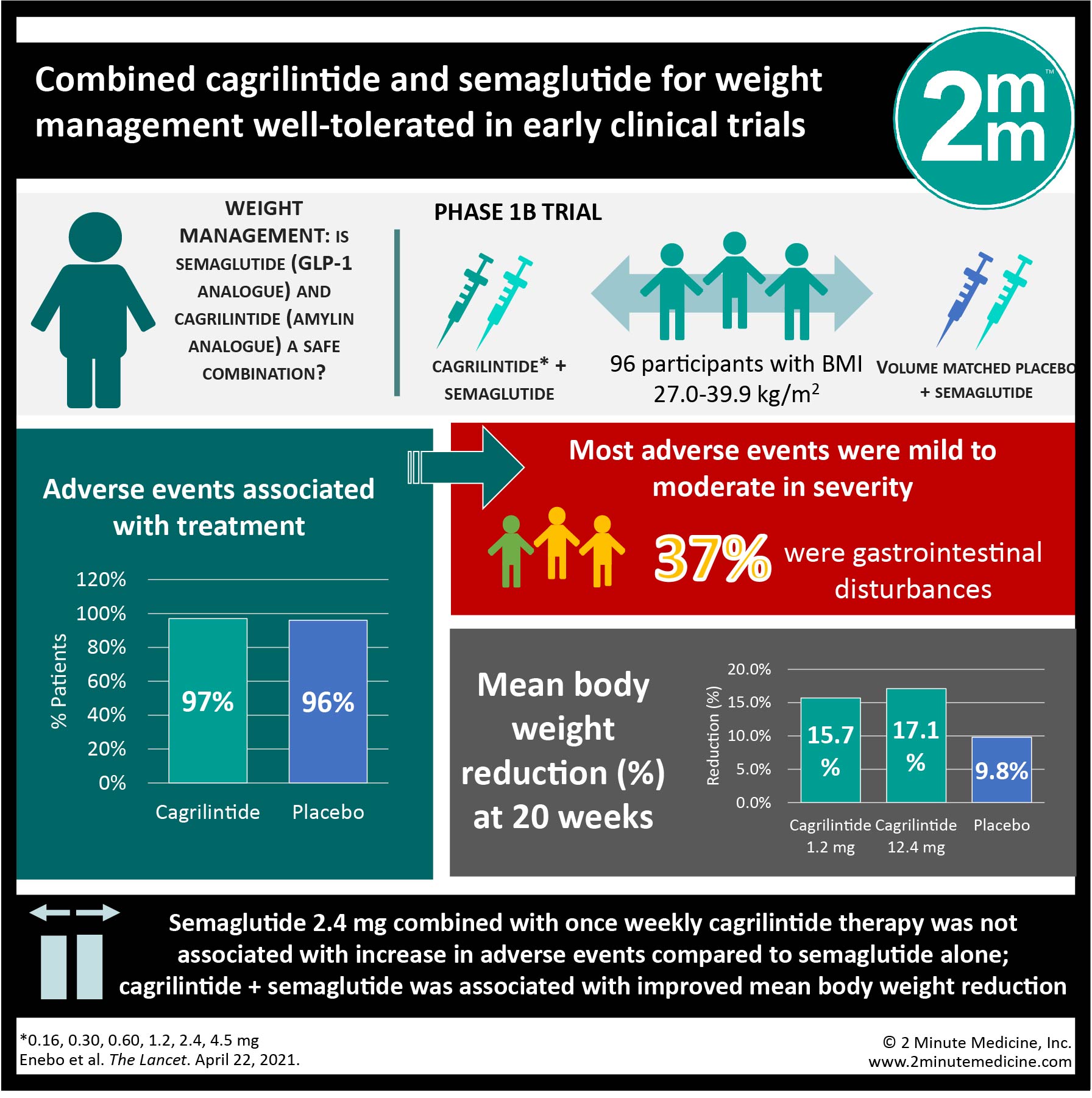
Standard CagriSema dosing from clinical trials Phase 3 trial protocol: Semaglutide: Titrate to 2.4mg weekly Cagrilintide: Titrate to 2.4mg weekly Both given as separate weekly injections Slow titration over 16-20 weeks Semaglutide titration schedule: Week 1-4: 0.25mg weekly Week 5-8: 0.5mg weekly Week 9-12: 1.0mg weekly Week 13-16: 1.7mg weekly Week 17+: 2.4mg weekly (maintenance) Cagrilintide titration schedule (when combined): Week 1-4: 0.6mg weekly Week 5-8: 1.2mg weekly Week 9-12: 1.8mg weekly Week 13+: 2.4mg weekly (maintenance) Why slow titration matters: GI side effects worse if escalated quickly Especially with combination Body needs time to adapt Better long-term adherence Alternative dosing strategies Conservative approach (better tolerated): Semaglutide: Max 1.7-2.0mg weekly Cagrilintide: Max 1.8-2.0mg weekly Slower titration (20-24 weeks) For GI-sensitive individuals Aggressive approach (maximum weight loss): Semaglutide: 2.4mg weekly Cagrilintide: 2.4-3.0mg weekly (some trials test higher) Standard titration timeline For excellent tolerators seeking maximum results Higher side effect risk Sequential addition approach: Start semaglutide alone, titrate to 2.4mg (16 weeks) Stabilize for 4-8 weeks Add cagrilintide, starting at 0.6mg Titrate cagrilintide to 2.4mg (12 weeks) Total timeline: 32-36 weeks to full dose May reduce side effects Maintenance dosing: Once target weight achieved May reduce to: Semaglutide 1.7mg + Cagrilintide 1.8mg Maintain weight loss Better long-term tolerability More affordable Use our peptide calculator , peptide cost calculator , peptide dosing guide , and peptide dosage chart
Food poisoning occurs when harmful pathogens contaminate food or water, resulting in distressing symptoms like diarrhea, vomiting, and dehydration
Mariana Herrera Palm Beach Gardens, Florida I can't say enough good things about Humanaut Health in Palm Beach Gardens
The best perspective is not to view peptide therapy as an instant cure-all