Exploring Wound and Tissue Repair The healing capabilities of BPC-157 extend to various tissues and organs, encompassing muscle, tendon, ligament, bone, skin, and even ocular tissues
It is widely researched for its potential role in supporting tissue studies, including cellular migration and angiogenesis
How does 5-Amino-1MQ differ from GLP-1 medications
The lyophilized (freeze-dried) peptide must be carefully reconstituted with bacteriostatic water
This is a compounding-only category
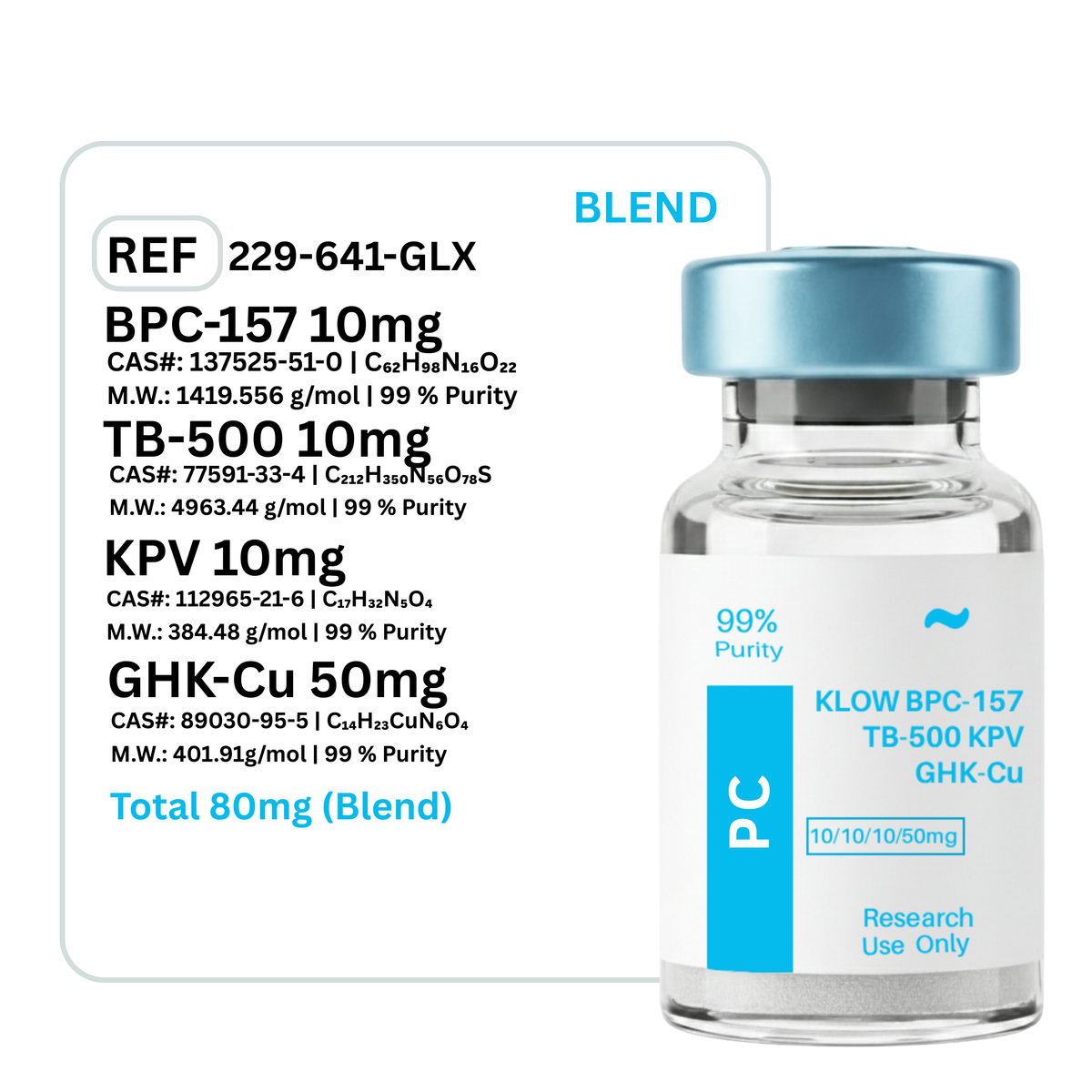
Product Specifications Category : Peptides Subcategory : Healing & Regenerative Peptides CAS Numbers: BPC-157: 137525-51-0 TB-500: 885340-08-9 Peptide Sequences: BPC-157: Gly-Glu-Pro-Pro-Pro-Gly-Lys-Pro-Ala-Asp-Asp-Ala-Gly-Leu-Val TB-500 (TB4): Ac-Ser-Asp-Lys-Pro-Asp-Met-Ala-Glu-Ile-Glu-Lys-Phe-Asp-Lys-Ser-Lys-Leu-Lys-Lys-Thr-Glu-Thr-Gln-Glu-Lys-Asn-Pro-Leu-Pro-Ser-Lys-Glu-Thr-Ile-Glu-Gln-Glu-Lys-Gln-Ala-Gly-Glu-Ser Chemical Formula: BPC-157 : CHNO TB-500(TB-4) : CHNOS Molecular Weight: BPC-157 : 1419.535 g/mol TB-500(TB-4) : 889.0 g/mol Purity : 99% (HPLCverified